

Elderberry Expert Rating and Opinion
The Elderberry Index for Helping Hand Aged Care - Rotary House is 3.9 out of 5, against a national average of 3.81. Three findings stand out as positive, and three are worth a closer look.
Things we noticed
Positive standouts
Residents consistently describe respectful, caring staff
100% positive on respect and 100% on caring staff, versus 95.4% and 95.4% across other homes.
Quality measures rating exceeds the national average
5 out of 5, compared with 3.06 across other rated homes in the August 2026 extract.
How well the home is run is above the survey average
100% answered “Always” or “Most of the time”, compared with 88.1% across other homes.
Worth a closer look
Reported care time falls short of a staffing target
Total care: 204 vs 202 minutes; registered nurses: 39 vs 42 minutes per resident per day.
Food enjoyment fell in the latest survey
78% positive in 2026, compared with 100% in 2025: 22 percentage points lower.
Residents’ experience rating trails the national average
3 out of 5, compared with 3.62 across other rated homes in the August 2026 extract.
Sources and Explanation
This is a programmatic interpretation of published data, not an in-person inspection or a separate expert-assigned score. The figures are the Elderberry Index and its four government component ratings; a measure the home has no published rating for is left out. Our rating methodology.
Ratings: August 2026. Survey comparisons: 2026 interview responses from that extract. Other Australian homes in the same ratings extract; survey comparisons also require the same interview year. Each eligible home has equal weight; missing/invalid values excluded. These are descriptive comparisons, not resident-weighted or adjusted for differences in care needs.
How findings are selected
Survey gaps of at least 3 percentage points, rating gaps of at least 0.3 stars, and changes of at least 10 percentage points can qualify. These are editorial selection thresholds, not tests of statistical significance. Benchmarks need at least 30 homes. Each side shows up to three eligible findings; missing values never become negative findings. Specific combined food evidence and sustained care-target results are prioritised, then larger differences. Respect and caring are grouped when both qualify.
Food spending uses the My Aged Care sector median for Jan–Mar 2026; resident enjoyment comes from the 2026 survey. The combined finding reports two separate observations from different reporting periods; it does not establish that spending caused the survey result. Year-to-year survey samples may differ and respondent counts are unavailable. Care consistency uses the latest four submitted, quality-checked care-minute records and direct RN minutes without EN top-up.
A lower compliance rating is a comparison with other homes, not a claim of an active sanction. Higher expenditure alone is not treated as better care. Unadjusted clinical incident measures are not used to rank quality here.
My Aged Care home profile · Government Star Ratings extract
Benchmark populations
| Measure | Mean | Other homes |
|---|---|---|
| Elderberry Index | 3.81 | 2365 |
| Residents’ experience | 3.62 | 2434 |
| Compliance | 4.83 | 2395 |
| Staffing | 3.18 | 2454 |
| Quality measures | 3.06 | 2456 |
| Respectful treatment | 95.35% | 1080 |
| Feeling safe | 96.24% | 1080 |
| How well the home is run | 88.07% | 1080 |
| Getting needed care | 94.42% | 1080 |
| Confidence in staff skills | 89.09% | 1080 |
| Encouragement to stay independent | 87.15% | 1079 |
| Staff explaining things | 80.27% | 1078 |
| Enjoying the food | 67.33% | 1080 |
| Following up concerns | 84.21% | 1079 |
| Kind and caring staff | 95.41% | 1080 |
| Having a say in daily life | 92.71% | 1080 |
What is the food like at Helping Hand Aged Care - Rotary House?
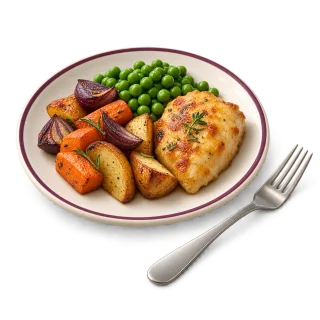
In the 2026 Residents’ Experience Survey, 78% of residents surveyed at Helping Hand Aged Care - Rotary House said they like the food “always” or “most of the time”, 10.7 percentage points above the average of 67.3% across other homes. The share fell from 100% in 2025. Another 14% answered “some of the time” and 7% “never”.
In January to March 2026, Helping Hand Aged Care - Rotary House spent $20 per resident per day on food, 25% above the sector median of $16. Spending on dietitians in the same quarter was $1.96 per resident per day, 600% above the sector median of $0.28.
How are meals prepared?
According to Helping Hand Aged Care - Rotary House, breakfast, lunch and dinner are all cooked fresh. All meals are prepared on site.
Do residents enjoy the food?
Residents who answered “Always” or “Most of the time”.
78% of surveyed residents
Spending & preparation
Daily spending on food and dietitian services, and how meals are prepared.
Sources and Explanation
What do residents say about Helping Hand Aged Care - Rotary House?
When residents surveyed at Helping Hand Aged Care - Rotary House for the 2026 Residents’ Experience Survey were asked whether the home is well run, 100% answered “always” or “most of the time”, above the 88.1% average across other homes by 11.9 percentage points. When residents were asked whether staff treat them with respect (100% against 95.4%) and whether staff are kind and caring (100% against 95.4%), answers were also above the average for other homes.
The largest gap below other homes was when residents were asked whether staff explain things to them: 71% answered “always” or “most of the time”, against an average of 80.3%. In all, answers on 3 of the 10 questions other than food were at least 3 percentage points below the average for other homes.
What should you ask about on a visit?
On a visit, you can ask about how staff explain changes to care. When residents were asked whether staff explain things to them, 21% answered “always”, 50% “most of the time”, 21% “some of the time” and 7% “never”.
Do residents feel safe and get the care they need?
When residents surveyed at Helping Hand Aged Care - Rotary House were asked whether they feel safe, 71% answered “always” and 29% “most of the time”. When asked whether they get the care they need, 29% answered “always” and 64% “most of the time”.
How much care and nursing does Helping Hand Aged Care - Rotary House provide?
Helping Hand Aged Care - Rotary House reported 204 minutes of care per resident per day in January to March 2026, 2 minutes above its target of 202 minutes. Of those minutes, 39 came from registered nurses, 3 minutes below the registered-nurse target of 42.
In three of the last four quarters, Helping Hand Aged Care - Rotary House met both its total and registered-nurse targets. Across those four quarters, minutes of care per resident per day ranged from 203 to 216.
Who provides that care?
Of the 204 minutes, personal care workers provided 119 (58.3%), followed by enrolled nurses (46 minutes, 22.5%) and registered nurses (39 minutes, 19.1%). In the same quarter, Helping Hand Aged Care - Rotary House also reported spending on physiotherapists, podiatrists, speech pathologists, dietitians, and lifestyle and recreation workers.
How does Helping Hand Aged Care - Rotary House spend on resident care?
In the 2024–25 financial year, Helping Hand Aged Care - Rotary House spent $464.36 per resident per day, and care and nursing made up 54.4% of it. Care and nursing spending of $252.75 was 5% below the sector median of $264.85. These amounts are the home’s costs, not the fees a resident pays.
Where does the rest of the spending go?
Other categories included administration ($70.76), cleaning and laundry ($52.77), and accommodation and maintenance ($45) per resident per day. Within care and nursing, the largest amounts per resident per day went to personal care workers and assistants in nursing ($115.46) and registered nurses ($53.07).